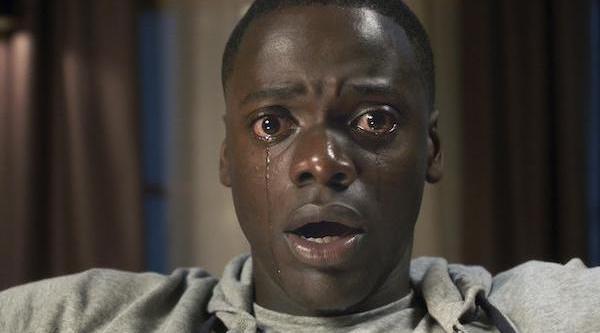
Oh, wow, that's just fab, Mr. DiCaprio!

As someone who has done a more than a few interviews in his career, I realized long ago that celebrity interviews aren’t about getting to any kind of truth. They’re more about getting something, anything, around which you can build an article (column, profile, whatever).

That’s particularly difficult to do when you’re in one of those group-interview settings called junkets. I went on two of those: One in 1989 for Steven Spielberg’s minor effort “Always,” and then again for the 1993 Johnny Depp vehicle “Benny and Joon.”

You sit in a semicircle with reporters from, say, the L.A. Daily News, the Calgary (Alberta) Herald and some college DJ from Bakersfield Junior College, and lob softball questions at the likes of Depp, Spielberg, Holly Hunter, Richard Dreyfuss or Mary Stuart Masterson.

Even in such a setting, though, it’s possible to be professional. Which is NOT how I would describe the interview that this filmazing.com reporter did with Leonardo DeCaprio or Russell Crowe in support of their film “Body of Lies” (directed by Ridley Scott, it opens today).

Remember the three great lead-ins to any question you might want to ask: “Great,” “That’s fabulous” and “That’s fantastic.” You can’t go wrong.

Below: Mary Stuart Masterson was one of the joys of the filmed-in-Spokane movie “Benny and Joon.”

Associated Press photo

Life in Istanbul is rug rich

It’s been a while since I’ve been able to use my passport. Last June, actually, when I was in Italy and Spain.

Which is one reason why I am so jealous of Spokane author Meghan Sayres. She just sent me an e-mail regarding her current Turkish adventure. Seems she’s in Istanbul taking an intensive Turkish language course.

She’s also blogging her experience on www.storyforce.net. She sent me a recent post that I thought I’d include as a post of my own. Go to Storyforce to get more.

All Politics is Local

Merhaba! My intensive Turkish language class is tough but fun. I’ve learned much in just two days, but my jet lag kicks in during the fourth hour when I become worthless.

Just when I thought I had traveled far enough from home to leave behind the last several weeks of the presidential debates and the economic capriciousness, I met Engin. En route to the tram that takes me to Taksim Square, where the Tomer Language School, is, I have had the pleasure of visiting with this local rug artisan who refashions pieces of Oriental carpets and kilims into hand and travel bags. He has invited me to join him for tea to practice Turkish and I plan to take him up on his offer. Meanwhile, this is what he said to me when I ducked in to ask him where I could buy a fan for my room.

“For electrical appliances you must go to a part of town called Karakoy. It is like Wall Street in New York, with lots of banks. Only they have money.”

I grinned. “Can you believe the mess the U.S. is in?”

“They are all stupid. It’s all about getting people in debt,” Engin says, putting down his leather tools so that he can gesticulate better with his hands. “They spend $500, even $5,000 on a dinner in New York and yet people elsewhere feel lucky to have bread. Stupid! But there are people like them here in Turkey, too. Everywhere.”

When I visit Engin again, I will ask him how he would deal with the Wall Street debacle and who he would like to see become the next president of the United States. Perhaps then I’ll leave politics behind...

Below: Spokane author Meghan Sayres stopped in this Istanbul carpet shop.

Photo by Meghan Sayres

Diddy'll see 'that one' at the polls

Like many people today, P. Diddy – aka Sean Combs – keeps a blog, a video blog. In a recent edition, he became outraged about a comment that John McCain made during one of the debates that he’s been having with fellow U.S. senator Barack OBama. His reaction is restrained to the point of being almost funny. Almost.

You can access the post below.


Palin: the vacuous, chatty sportscaster

You may listen, as I do on occasion, to Garrison Keillor, host of Public Radio’s “A Prairie Home Companion.” And, like me, you may admire the man’s ability to tell a story.

In that vein, I offer the following commentary by Keillor. It concerns the Republican nominee for vice president, Alaska Gov. Sarah Palin.

Sometimes the most folksy commentaries are the most effective. Not to mention honest.

'Blindness' succeeds, despite its blind spots

Fernando Meirelles’ film “Blindness” is hardly an original vision, so to speak. It follows in a long line of more recent post-apocalypse movies, including:

“Children of Men”: Alfonso Cuaron’s adaptation of P.D. James’ novel about life disintegrating after men suddenly go sterile.

“I Am Legend”: Francis Lawrence’s adaptation of Richard Matheson’s novel about a plague wiping out every human in New York City except one (Will Smith).

“28 Days Later”: Danny Boyle’s reinvention of the zombie flick, plus its follow-up “28 Weeks Later.”

“Time of the Wolf”: Michael Haneke’s somber, no compromising look at the French turning on one another following an unexplained catastrophe.

“Last Night”: “Blindness” screenwriter/star Don McKellar wrote and directed this original look at the last night on Earth.

“The Happening”: M. Night Shyamalan gives us a creepy trek into the weird that, in the end, devolves into just another of his gimmick films.

And coming on Nov. 26: John Hillcoat’s adaptation of Cormac McCarthy’s novel “The Road,” which follows the struggles of a man and his son to survive the devastation of another unexplained event.

So “Blindness,” which has a group of people trying to survive after the whole population (except for Julianne Moore) going blind, isn’t particularly original. The thing that it has going for it, though, is the filmmaking ability of the Brazilian-born Meirelles, who did so well with “City of God” and “The Constant Gardener” (one of the best films of 2005).

It is Meierelles who makes McKellar’s slight story and bare characterization into a filmmaking exercise, one that captures the claustrophobic feel of what the characters’ struggle would be like without ever giving us a good feel for who each personally is. In his hands, “Blindness” is far more than just another genre study. It becomes actual cinema.

Below: Mark Ruffalo and Julianne Moore play husband and wife in Fernando Meirelles' post-apocalypse film “Blindness.”

Associated Press photo

L.A. is no city of angels

As I was going to college in San Diego, I always had this feeling that, one day, I had to get out of that place. One option was to go north. But I was even more turned off to the obvious charms of Los Angeles, though I could never really explain – even to myself – why.

Now, Steve Perry, the lead singer of the swing band Cherry Poppin’ Daddies, explains it in a way that even I can accept.

“You know, L.A. is the creepiest place in the world to me, because the light is sort of soft and muted and nice and sunny, but Manson exists there. So, the cliché is the horrible, scariest place in Transylvania, but in actuality, it's Los Angeles.”

Pretty much captures it all.

She's working hard for her novel

If you want to get some idea of what Sherry Jones is going through to defend her novel, click here.

What's an extra 't' or two?

I was just completing Monday’s People column – which I’ve been doing since my colleague Rick Bonino has been assigned to cover the Coe trial – and I stumbled over something in the profile of the singer Fergie.

Now this is something that I didn’t know – or, in any event, hadn’t noticed: Fergie’s debut solo 2006 LP was titled “The Dutchess.”

The explanation most offered for the LP’s title was to take advantage of the similarity between Fergie – whose given name is Stacy Ann Ferguson – and the Duchess of York, Sarah Ferguson. Or, in any event, the similarities between their names.

Here’s the problem, though: Duchess is spelled without the “t.” Most reports about the LP’s title claim that the misspelling is intentional. Which is all well and good. But what, then, is the point? Is there supposed to be some sort of clever wordplay that I’m missing?

Or, more likely in the view of the London newspaper Globe and Mail, are such claims mere covers for someone’s essential illiteracy? Good question.

Get ready: 'Dark Knight' is coming home

If you’re one of the half dozen or so movie fans who didn’t get around to seeing “The Dark Knight” on the big screen, you might want to read this. Seems Christopher Nolan’s second Batman movie is coming to DVD before the year is out.

According to VideoETA, there’ll be a difference between the two-disc special edition DVD and the two-disc Blu-ray edition: The DVD version focuses on Heath Ledger’s Joker, while the Blu-ray is all about Christian Bale’s Batman.

Now, that’s the first reason I’ve read – other than the fact that I still haven’t invested in a Blu-ray machine – that makes me glad to stay with my regular DVD player. “The Dark Knight” is Ledger’s film, not Bale’s, and his back story is the one that interests me the most.

The reality of the new millennium

News to whomever cares: I made the cut of The Spokesman-Review’s latest round of layoffs. So, for the moment, I will continue writing about Spokane-area arts.

Many of my colleages are not as fortunate. To quote Kurt Vonnegut, “So it goes.”

Here are five to help you get through

We’re facing a national financial disaster. Here are some films that should help prepare you for what’s happening now and what might be on the horizon:

“Wall Street” (1987): Want to know why we’re in such sad shape? Oliver Stone gave us some indication with this study of capitalism and the ethics of one aptly named businessman, Gordon Gekko. Remember: “Greed is good.” Right.

“The Grapes of Wrath” (1940): Working from Nunnally Johnson’s adaptation of John Steinbeck’s massive (464 pages) study of the Great Depression, John Ford gives us a few pointers about what to do after the financial fall. No. 1: stay away from California.

“Children of Men” (2006): In Alfonso Cuaron’s adaptation of P.D. James’ novel, the conceit is that humans can’t reproduce. Which sets us on the path of cultural destruction. But we don’t need conceits to see the real-life possibility of black-suited thugs imprisoning immigrants and protestors.

“The Terminator” (1984): Robots/androids/cyborgs, whatever you want to call them, have taken over. Humans fight to remain relevant. James Cameron’s suggestions: Arm yourself, then seek out a savior.

“The Matrix” (1999): A potential future, one that sees humans being used as the energy that runs the world. A human named Neo swallows the red pill and, following a lot of cool kick-ass fights, sees the way to liberation. It all begins again.

Below: The trailer for the Wachowski brothers' original entry in their “Matrix” trilogy.

Paul Newman was a pretty boy who could act

Before she even said hi, my friend Leslie Kelly called me Saturday morning to ask me what my favorite Paul Newman film was. I hadn’t yet heard that Newman had died the day before, but her question immediately made me suspicious.

“Hmmmmm,” I said. “Probably ‘The Verdict.’ That, at least, was the film that he should have won the Academy Award for. Not ‘The Color of Money,’ which is the film he did win it for.”

I’d answered quickly, not particularly thoughtfully, but I don’t regret my choice. In any list of top 10 Newman performances, “The Verdict” has to rank in there somewhere.

It’s a few day later, and I’ve had time to consider the question. So, having already mentioned “The Verdict,” I’m going to name my favorite of Newman’s other films (among which “The Color of Money” doesn’t rank).

“The Sting” (1973): His second pairing with Robert Redford has Newman playing a charming con man.

“Butch Cassidy and the Sundance Kid” (1969): As the gang leader Cassidy, Newman is a blend of smart and stupid. “Who are those guys?!?”

“Cool Hand Luke” (1967): Playing a self-destructive drunk, Newman manages to wink at the world – or flip it the bird. Kind of the same thing.

“Hombre” (1967): Never cracking his familiar smile, Newman plays a man raised by Apaches who ends up being the unwilling savior of a stagecoach full of strangers.

“The Hustler” (1961): Playing the flawed Fast Eddie Felson, Newman captures the spirit that – years later, in Martin Scorsese’s revisiting of Felson’s character – would finally win him his gold statuette.

“Cat on a Hot Tin Roof” (1958): Though I prefer the 1985 Jessica Lange/Tommy Lee Jones made-for-TV version, this is the classic version of Tennessee Williams’ play to which all others are compared.

“Slap Shot” (1977): And I included this hockey classic because, as a former sportswriter, I kind of have to.

Below: The scene from “The Verdict” that should have won Paul Newman his Oscar.

Here are five scary ones

It’s a topic we always come back to: scary movies.

Seems to me it’s better to compile scary scenes because so many movies fail to maintain a 100-minute mood of fright. But so many people opt for the movies themselves.

Which is what Ben Greenman, a writer and editor at the New Yorker, has done. His list, though, is only five movies long.

You can access it by clicking here.

'Brisingr' makes booksellers happy

This just in from The Associated Press:

“First day sales in North America topped half a million for Christopher Paolini’s novel ‘Brisingr,’ the third of his million-selling “Inheritance” fantasy cycle and unveiled last weekend with a Harry Potter-like midnight opening.

“According to publisher Random House Children’s Books, ‘Brisingr’ sold 550,000 copies in the first 24 hours, four times higher than ‘Eldest,’ the second of Paolini’s planned four-book series. It was the highest opening ever for a Random House children’s book, but far below the 8.3 million copies in the United States alone for the launch of ‘Harry Potter and the Deathly Hallows,’ and the 1.3 million for Stephenie Meyer’s ‘Breaking Dawn,’ which was released at midnight on Aug. 2.”

Not bad for a home-schooled 24-year-old from western Montana.

Was Georgiana the Princess Di of her day?

I ambled into the office this morning to find the following e-mail:

Dear Mr. Webster:

Do you know if the movie “The Duchess” with Keira Knightley will be coming to Spokane soon? I think that it is playing in other places because I have seen the ad in the New York Times.

– Joan Tracy

Here was my reply:

No word yet. It did, yes, open nationally on Sept. 19. But the downtown AMC theater doesn’t have it on its scheduled list. So the film is likely to come only at the last minute. Maybe next week. Maybe the week after. Check back with me next week and I’ll see if anything has changed.

– Dan

What’s interesting about the film is that it seems to be, according to those who have seen it, a retelling of the Diana Spencer story, with Knightley – though already playing a real historical person – cast as the Diana equivalent and Ralph Fiennes as her Prince Charles counterpart.

In fact, Knightley’s Duchess, Georgiana Spencer, was Princess Di’s great-great-great-great aunt. And if that isn’t enough, this opening graph from the Detroit Free Press’ advance review would seem to say the rest:

“Georgiana Spencer, the Duchess of Devonshire, was a beautiful, famous, independent woman whose taste wielded great influence over popular culture. She was more beloved by the British people than her dullard husband, who engaged in an affair while Georgiana pursued her own.”

For a feel of what happened then, click here.

Below: Keira Knightley stars as Princess Di's ancestor (and erstwhile role model) in the film “The Duchess.”

Associated Press photo

Movies titles so bad ... they're good!

Here’s a movie title to look for: “Bikini Bloodbath Carwash” is coming to DVD on Oct. 31.

Here are a few of my other favorite horror/slasher-film titles:

“Attack of the Flesh Devouring Space Worms from Outer Space”

“Gentlemen Don’t Eat Poets”

“Hey, Stop Stabbing Me!”

“Please Don’t Eat the Babies”

“So, You’ve Downloaded a Demon”

And my all-time brand-new favorite:

“Sorority Babes in the Slimeball Bowl-O-Rama”

I couldn’t make up stuff like this. You can find these and other tasty titles by clicking here.

Just another bit of good '70s rock

I was just stumbling around on the Internet and I came across one of the most compulsively listenable music videos ever made. The group of Blondie, and the lead singer is Deborah Harry.

Listen … and enjoy.


Cut those novels to their prose bone

My colleague Amy Cannata just encapsulated one of the great American novels in eight short sentences, totaling 28 words. It’s brilliant.

Think you can guess the book? Here it is:

“This puppy is soft. It stopped moving. Ooooh. Your hair is soft. Hey, why aren’t you moving? Sure George, I’ll look at where we’re going to live. Ouch.”

Think you can do better? Click here and condense a novel of your own choice.

Jokers or journalists? Who can tell?

I don’t know exactly how it happened, but I find myself receiving regular e-mail announcements from the New York Post. Some are entertaining, so I don’t really mind.

Then I received one today that links to this story regarding President Bush’s address to the United Nations and the reaction by Iranian President Mahmoud Ahmadinejad. And for a second – more than a second, actually – I thought I was reading a post from The Onion.

This is what we call 21st-century journalism? It’s more of what I would have expected from newspapers of little more than a century ago, the kind of sensation-driven papers run by men such as Joseph Pulitzer and William Randolph Hearst whose efforts, even if they didn’t have a direct effect, at the very least helped pave the way to a war with Spain.

No wonder so many people today turn to entertainment outlets – The Onion, for example, and Comedy Central – to get their political news. If we’re going to be led by clowns, they might as well be talented professionals.

Below: For political comedy, nobody beats Stephen Colbert.

Associated Press photo

Wang's movie features 'colorless' Spokane

Spokane is one of those cities that must have a “kick me” message attached to its welcome signs. Why else would the insults fly so freely in our direction?

It’s easy to understand when those insults come from Seattle. Residents of Microsoftville/Boeing Boeing City would sneer at Shangri-la if such a paradise existed.

And, to be fair, they would have some reason: Coffee in Shangri-la probably isn’t all that good. Still, the coffee on this side of the Cascades is serviceable. In some cases it’s superior. And we have the sun, which is something Seattle types can’t forgive us for.

Apparently, though, what we lack is … color. That comment, though, doesn’t come from Seattle. It comes from that other Washington – the nation’s capital. And it comes in a review of Wayne Wang’s “A Thousand Years of Good Prayers,” a movie that was filmed on location in Spokane and Coeur d’Alene in 2006 with a cast that included several local actors, including Patrick Treadway and Wes Deitrick.

Here’s a quote from the National Public Radio review by Mark Jenkins, a critic who writes both for the Washington Post and Washington City Paper: “Everything about this movie is modest. It has only two central characters, was shot on digital video, runs less than 90 minutes and is set in a colorless Spokane, Wash.”

Spokane’s run of badly reviewed movies continues. But so what?

I’m looking out my office window and THE SUN IS SHINING BRIGHTLY!

Here's.Your.News.Now.OK?

If, following the item below, you are disturbed – if not outright frightened – by the way the world of information dissemination is going, gird your loins before reading this Talk of the Town piece in The New Yorker.

My favorite reference: thinking that Joan Didion’s prose is suited well for reading on an iPhone because her “sentences don’t rely on subordinate clauses.”

Below: When reading on your iPhone, shorter is better.

Associated Press photo

If the public likes it, it must be good - right?

One thing that I've learned over the years is that you can learn something by listening. The following e-mail from my young friend and fellow film critic Nathan Weinbender is so spirited and fresh and intelligent that I can't really add anything.

He expresses what I feel even better than I could:

Dan,

I just read this article at MSN.com, and it’s one of the most immature and contradictory pieces of criticism I have ever read. I figured I would share it with you – possible blog fodder, I suppose.

Anyway, it consists of the author, Kathleen Murphy, complaining about critics who are self-absorbed and archaic and who take the art of filmmaking seriously. Her thesis seems to be that the best films are the ones that make the most money (“Shouldn’t it be in the job description,” she writes, “that if a critic sees a movie with 300 wildly applauding folks, it’s against the rules to write as if that doesn’t count?”), and that movies immediately become irrelevant once they turn five years old.

She resents critics, she says, because they “[explain] how wrong we are to prefer ‘Transformers’ to ‘No Country for Old Men,’ ” then going on to tell every critic who disliked “The Dark Knight” (yeah, all 10 of them) that they were wrong for disliking it. Judging by her bio, she must be in her 40s or 50s, but she uses pseudo-hipster lingo (like “gravy, man, just gravy,” “slang-and-snark pleb” and “instant kudzu”) that would make Juno cringe – that sort of wordplay not only rings of desperation, but also makes the writer seem infinitely more out-of-touch than they already are.

And she brings up “The Dark Knight” so many times that I’m compelled to think that it’s the only movie she’s ever seen. That would explain why she can’t think of any other examples of critics dumping on movies that she deems praise-worthy. (Actually, she does bring up “Crash” – see, critics were wrong for bashing that film because it won Best Picture. Yet she seems to have no problem finding fault with the acclaim “No Country for Old Men” received, even though it took home the SAME AWARD.)

I’m sorry I’m ranting, but this article truly pissed me off. Murphy is basically undermining art, as well as anyone who wants to take it seriously or write about it thoughtfully. Her criticisms draw from what critics thought, but not how they thought it – it is possible, ya know, to disagree with a movie review yet still find truth and intelligence in the critic’s arguments. And her conceit that any 20-something with a keyboard can do what Roger Ebert or A.O. Scott or David Denby do is as flawed and narrow-minded as saying that finger painting should be equated to Rembrandt.

Anyway, good luck getting through that article without putting your foot through your computer screen.

– Nathan

That's genre with a capital G

There are, I suppose, two ways to judge “Lakeview Terrace,” Neil LaBute’s new film, which opened today.

Either it is a riveting look at the human condition that degenerates into an exploitative genre flick, or it is a strictly genre effort that rises above its limitations due to the talents of a first-rate filmmaker.

Either way, “Lakeview Terrace” isn’t likely to take its place among the better films on LaBute’s once-sterling resume. Films such as “In the Company of Men,” “Your Friends and Neighbors” and “The Shape of Things” are all art films that made an actual imprint on mainstream cinema.

But it doesn’t deserve to be ranked among LaBute’s last film, his 2006 remake of Robin Hardy’s “The Wicker Man.” That film, which starred Nicolas Cage in one of his hammiest performances ever (and that’s going some), was universally panned – and rightfully so.

No, “Lakeview Terrace” belongs somewhere in the middle. For much of its running time it operates as a character study, focusing on a wound-too-tight L.A. cop (Samuel L. Jackson) who can’t quite accept the mixed-race couple (Patrick Wilson, Kerry Washington) that moves in next door. And until a gun is pulled, and a body ends up in the swimming pool, the hope exists that the character study will end up like a more personal version of the Oscar-winning “Crash.”

But that gun does get pulled, the body does end up in the pool, the water does turn red, and the film does become what the trailers so aptly advertised “Lakeview Terrace” as being: a thriller with a few extra trimmings.

One more viewer appreciates HBO's 'The Wire'

I came into the office this morning to find the following e-mail:

Dan, after your review sent me to “The Lives of Others,” I took similar action with “The Wire.” In the last few months, I have watched almost no other Netflix offering, and finished the last year’s series yesterday. Wow. Parts of it broke my heart; all of it has resided in my mind over the last months. I continue to sift through what it all means.

I’m just wondering if you intend to write something about the series in total, particularly with the last year’s newsroom perspective added into the stew that constitutes urban life in the 21st century? I sure look forward to reading it if you do…

Thanks for the quality you add to 7 for this reader.

– Pat Raffee

Pat: Thanks for your kind words. I hadn’t planned on writing anything specific about “The Wire,” except as part of my ongoing attempt to draw viewers to worthy TV series available on DVD.

What I find amazing is that during its run, “The Wire” didn’t win a single Emmy, and in fact was nominated only once – for writing. All that great acting, directing, storytelling … unrecognized.

Well, at least it’s been appreciated by viewers such as you. I’m happy that you took the time to check it out.

– Dan

Does 'Max Payne' deserve a PG-13 rating?

Here’s a bit of news (actually it came out last week) about the director of the forthcoming film “Max Payne” and his struggles over the rating of his film. He thinks it should be rated PG-13, and the MPAA apparently thinks otherwise.

Below: Mark Wahlberg (right), shown here with Michael Pena in the film “Shooter,” seems to be preparing for “Max Payne,” which is due Oct. 17.

Associated Press photo